Spring Leaf Project
Project Overview
The office is divided into functional zones—reception, open-plan workstations, private
executive suites, and collaborative breakout areas. The design utilizes a consistent
palette of lime green (brand identity), warm oak wood, and neutral grays/whites. The
layout prioritizes natural light, with glass partitions ensuring that even the internal
workstations benefit from the perimeter windows.
Location:
Tanjong Pagar
Project Type:
Office
Design Style:
Warm Modernism
What Makes This Office Design Special
Brand-Centric Storytelling
The design doesn't just use a logo; it integrates the company’s mission into the
architecture.
- The "Nutricrops" Curved Entry: The reception features a curved wall with a
textured, plaster-like finish reminiscent of organic materials. The display of
grain/soil samples in recessed wall bowls immediately communicates the
company’s core business to visitors. - Thematic Murals: Large-scale wall graphics showing lush green fields and farmers help humanize the corporate space and remind employees of the real-
world impact of their work.
Strategic Use of "Nature’s Palette"
The color story is highly intentional.
- Lime Green Accents: Used sparingly but boldly on acoustic dividers and pantry walls, the green provides a "pop" that feels energetic and fresh.
- Wood Grain Continuity: From the vertical timber wall panels to the executive
desks and kitchen cabinetry, the use of oak brings a sense of stability and
warmth to an otherwise clinical office environment.
Hybrid Collaboration Spaces
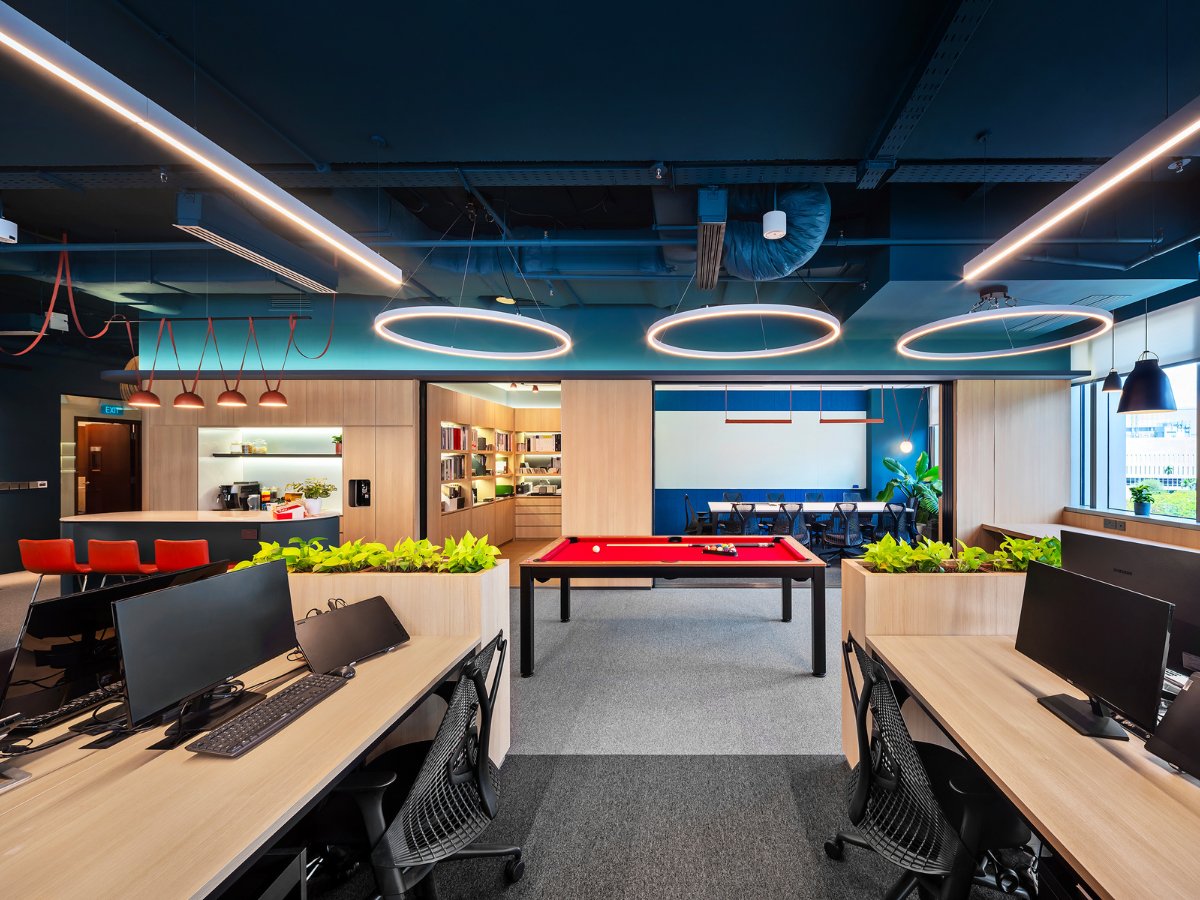
The pantry area (the "Social Hub") is designed more like a modern café than a
traditional breakroom.
- Bar-Height Seating: Encourages quick, informal "stand-up" meetings.
- Visual Transparency: The use of glass walls for the large boardroom allows the office to feel expansive and interconnected, promoting a culture of transparency.
Ergonomics and Acoustic Comfort
The workstation area shows high-quality ergonomic mesh chairs and acoustic privacy screens between desks. The carpet tiles feature a geometric gray pattern, which is likely chosen for its ability to absorb sound in an open-plan setting while hiding wear and tear.